Here are the best gaming graphics cards for the money.
 The best graphics card can mean a lot of different things to different people. Are you after the fastest graphics card, regardless of the price? Or maybe you want the best graphics card in overall value? For PC gaming, no other component impacts your experience as much as the graphics card. We test and review all the major GPUs, and we've ranked every graphics card in our GPU hierarchy based on performance. Here we pull everything together to come up with the best graphics cards you can currently buy.
We've expanded our list of the best graphics cards, recognizing that there's a lot of potential overlap, especially when it comes to choosing between AMD and Nvidia GPUs. For instance, is the RX 5700 XT better than the RTX 2060 Super? We think so overall, but individual preference definitely plays a role and we've included both as options in this list. Nvidia continues to rule the performance charts, with the various RTX 20-series GPUs occupying the top four positions, but competition is tight in the budget, mid-range, and high-end (but less than $400) markets.
The most recent GPUs released are AMD's RX 5600 XT, and the RX 5500 XT in both 4GB and 8GB variants. Nvidia and its partners have responded with a price cut on certain RTX 2060 models, along with new GTX 1660 Super and GTX 1650 Super cards that swap out the GDDR5 memory for GDDR6 memory. Supplies of GDDR5 are apparently getting scarce, which has led to Nvidia's partners also releasing GTX 1650 GDDR6 models, which have 896 cores compared to the 1280 on the 1650 Super. All of those GPUs are worth considering, particularly if you're playing at 1080p and don't want to spend a lot of money, though not all of them made the cut for this list. Consider this an honorable mention and keep an eye out for sales and price changes, as that has a big impact on what makes something the best graphics card in a particular segment.
In the midst of the global COVID-19 pandemic, it's no surprise that supplies and shipping of computer parts has become a bit uncertain. Most graphics cards are still available, but specific models may not be in stock. Depending on where you order your parts and where you live, shipping could take several extra weeks. Looking forward, the coronavirus has also forced cancellations of major events, including GDC and GTC, and Computex is delayed several months and very likely heading toward cancellation as well. Many expected Nvidia to reveal its Ampere GPU architecture at GTC, but that didn't happen. At this rate, Nvidia's RTX 3080 / Ampere and AMD's Big Navi could slip into 2021. Plan accordingly.
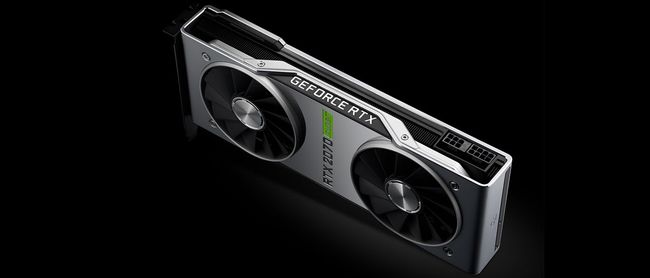
The law of diminishing returns is in full effect as you move up to the top of the GPU hierarchy, which means you'll pay more for proportionately less performance every additional step. The best way to avoid that is to drop back a few notches, which is where you'll find the RTX 2070 Super. 4K gaming is probably a stretch, unless you drop down to medium quality, but 1440p ultra is still viable. Only one game (Assassin's Creed Odyssey) in our test suite dropped below 60 fps at 1440p, and just barely.
Just as the RTX 2080 Super is a sensible step down from the 2080 Ti, the 2070 Super is only about 10% slower than the 2080 Super but costs almost 30% less. It's also only a few percent slower than the now discontinued vanilla RTX 2080, and you still get 8GB of GDDR6, ray tracing and DLSS, and a card that beats the previous generation GTX 1080 Ti — along with every current AMD GPU. This is all at the same price as the slightly older and slightly slower RTX 2070, and there's no Founders Edition tax this round.
Whether it's the latest shooter at maxed out settings, ray tracing games like Control or Deliver Us the Moon, or getting lost in VR with Valve's upcoming Half-Life: Alyx, the RTX 2070 Super should be able to keep you happily gaming for several years.
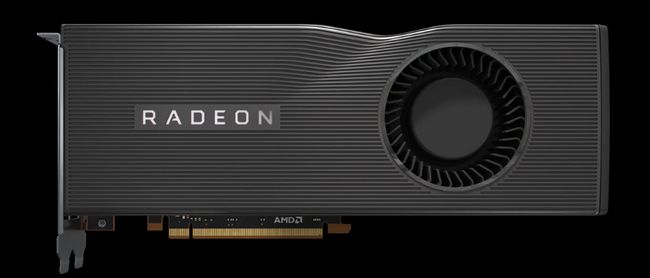
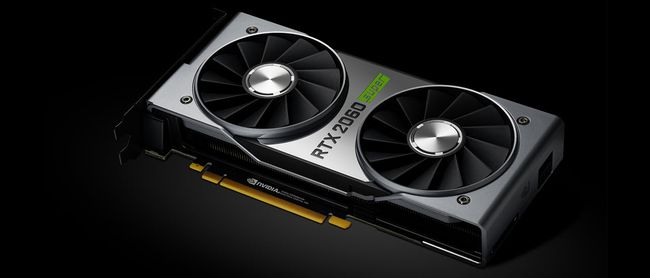
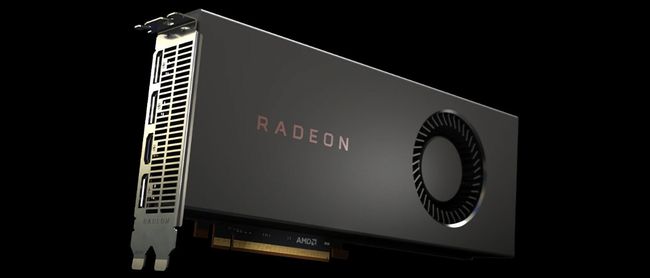
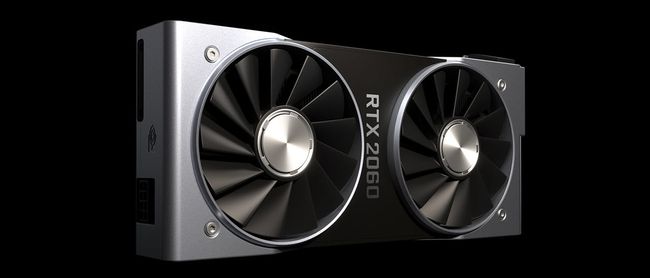
We've expanded our list of the best graphics cards, recognizing that there's a lot of potential overlap, especially when it comes to choosing between AMD and Nvidia GPUs. For instance, is the RX 5700 XT better than the RTX 2060 Super? We think so overall, but individual preference definitely plays a role and we've included both as options in this list. Nvidia continues to rule the performance charts, with the various RTX 20-series GPUs occupying the top four positions, but competition is tight in the budget, mid-range, and high-end (but less than $400) markets.
The most recent GPUs released are AMD's RX 5600 XT, and the RX 5500 XT in both 4GB and 8GB variants. Nvidia and its partners have responded with a price cut on certain RTX 2060 models, along with new GTX 1660 Super and GTX 1650 Super cards that swap out the GDDR5 memory for GDDR6 memory. Supplies of GDDR5 are apparently getting scarce, which has led to Nvidia's partners also releasing GTX 1650 GDDR6 models, which have 896 cores compared to the 1280 on the 1650 Super. All of those GPUs are worth considering, particularly if you're playing at 1080p and don't want to spend a lot of money, though not all of them made the cut for this list. Consider this an honorable mention and keep an eye out for sales and price changes, as that has a big impact on what makes something the best graphics card in a particular segment.
In the midst of the global COVID-19 pandemic, it's no surprise that supplies and shipping of computer parts has become a bit uncertain. Most graphics cards are still available, but specific models may not be in stock. Depending on where you order your parts and where you live, shipping could take several extra weeks. Looking forward, the coronavirus has also forced cancellations of major events, including GDC and GTC, and Computex is delayed several months and very likely heading toward cancellation as well. Many expected Nvidia to reveal its Ampere GPU architecture at GTC, but that didn't happen. At this rate, Nvidia's RTX 3080 / Ampere and AMD's Big Navi could slip into 2021. Plan accordingly.
Quick Shopping Tips
When buying a graphics card, consider the following:
- Resolution: The more pixels you're pushing, the more performance you need. You don't need top-of-the-line to game at 1080p.
- PSU: Make sure that your power supply has enough juice and the right 6- and/or 8-pin connector(s). For example, Nvidia recommends a 650-watt PSU for the RTX 2070 Super, and you'll need 6-pin and 8-pin PEG connectors.
- Video Memory: A 4GB card is the minimum we recommend right now, 6GB models are preferable, and 8GB or more is strongly recommended.
- FreeSync or G-Sync? Either variable refresh rate technology will synchronize your GPU's frame rate with your screen's refresh rate. If your monitor supports G-Sync tech (for recommendations, see our Best Gaming Monitors list), you'll need a GeForce GPU. AMD's FreeSync tech works with Radeon cards, and Nvidia has certified some FreeSync displays as being G-Sync Compatible.
Best graphics cards at a glance:
1. RTX 2080 Ti
2. RTX 2080 Super
3. RTX 2070 Super
4. RX 5700 XT
5. RTX 2060 Super
6. RX 5700
7. RTX 2060
8. RX 5600 XT
9. GTX 1660 Super
10. RX 570 4GB
Best Graphics Cards for Gaming 2020
1. RTX 2080 Ti
Best Graphics Card Overall / 4K (When Price is No Object)
GPU: Turing (TU102) | GPU Cores: 4352 | Boost Clock: 1,545 MHz | Video RAM: 11GB GDDR6 14 Gbps | TDP: 250 watts
- The fastest non-Titan graphics card
- Can legitimately do 4K high/ultra at 60 fps or more
- Factory overclocked models are readily available
- For most of us, price is an object
- Card is 18 months old now, so you might as well wait for Ampere
- Generally overkill for 1080p displays
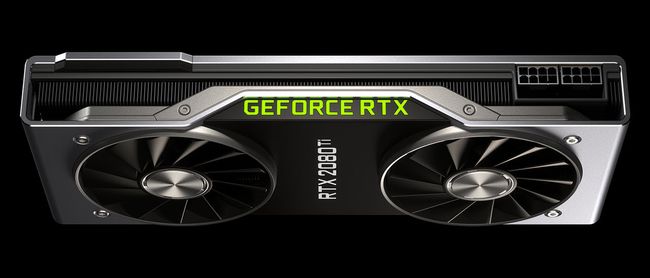
If you're looking for the no-holds-barred champion of graphics cards, right now it's the GeForce RTX 2080 Ti. If you're serious about maxing out all the graphics settings and you want to play at 4K or 1440p, this is the card to get — it's mostly overkill for 1080p gaming, though enabling all ray tracing effects in games that support the feature makes 1080p still reasonable.
Nvidia's Turing architecture is at the heart of the RTX 2080 Ti, boosting performance even if you don't enable ray tracing or DLSS. Concurrent floating-point and integer execution means that even with only moderately higher theoretical performance compared to the previous generation Pascal (GTX 10-series) GPUs like the GTX 1080 Ti, in practice the 2080 Ti is 35-40 percent faster at higher resolutions and settings.
There are three main reasons to not buy the 2080 Ti. First is of course the price — with cards starting at $1,050 and many selling for $1,200 or more, just the graphics card costs more than an entire mid-range gaming PC. On the opposite end of the spectrum, if money is really no object, there's still the Titan RTX: Double the price for a meager 3-5% increase in performance! Yeah, no thanks. Perhaps most importantly, the RTX 2080 Ti is nearing its two year mark. If you didn't buy one in 2019 or 2018, buying now doesn't make much sense, what with Nvidia's Ampere expected to launch later this year.
2. RTX 2080 Super
Best High-End Graphics Card (at a Much Better Price)
GPU: Turing (TU104) | GPU Cores: 3072 | Boost Clock: 1,815 MHz | Video RAM: 8GB GDDR6 15 Gbps | TDP: 250 watts
- The second fastest consumer graphics card
- Better price to performance ratio than the 2080 Ti
- Fastest GDDR6 in a graphics card Expensive for a minor bump in performance over 2070 SuperCan't do 4K ultra in many games at 60 fps
- You should wait for Nvidia's Ampere 7nm GPUs
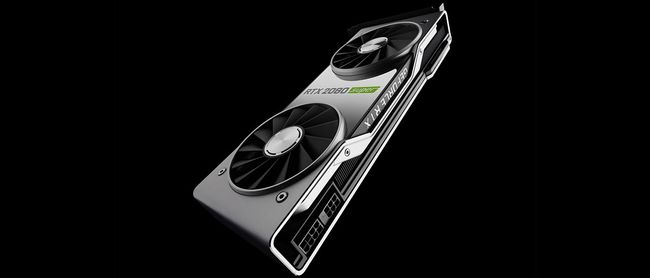
If your bank account is thinking about going on strike for eyeing the 2080 Ti, stepping down to the RTX 2080 Super might help. You're still getting the second fastest graphics card, saving about 35% on the price, and getting 85-90% of the performance. What's more, 1440p and 4K gaming are totally possible on the RTX 2080 Super, just not necessarily at maximum quality (especially 4K). The good news is that the difference between ultra and high quality in many games is difficult to see, while the jump in performance can be significant.
There's still the question of what will happen with ray tracing adoption in the future, of course. The first round of DirectX Raytracing (DXR) games has often seen performance drop by 30-40% when the feature is enabled. DLSS can often make up for that drop, but the implementations of both DXR and DLSS vary by game. But if you take a game like Control, which features ray traced reflections, contact shadows and diffuse lighting — the most complete implementation of ray tracing in a game to date (not counting Quake II RTX, which is old and still rather ugly) — performance dropped by half. If games in the near future start using more ray tracing effects, even the 2080 Super may not keep up.
We'd still argue it's still better than alternative of not even having ray tracing as an option. Buying an RTX 2080 Super gets you a graphics card that will handle any current game, and out of 12 games we tested (see below), it stayed above 60 fps at 1440p ultra in every case. Just be careful about potential buyer's remorse once Ampere shows up.
3. RTX 2070 Super
Best Graphics Card for 1440p
GPU: Turing (TU104) | GPU Cores: 2560 | Boost Clock: 1,770 MHz | Video RAM: 8GB GDDR6 14 Gbps | TDP: 215 watts
- Nearly RTX 2080 performance at a significantly lower price
- No more Founders Edition price premium
- All the ray tracing and deep learning features of the Turing architecture Nothing new compared to the non-Super RTX cards
- Ampere is coming, possibly sooner than later
Just as the RTX 2080 Super is a sensible step down from the 2080 Ti, the 2070 Super is only about 10% slower than the 2080 Super but costs almost 30% less. It's also only a few percent slower than the now discontinued vanilla RTX 2080, and you still get 8GB of GDDR6, ray tracing and DLSS, and a card that beats the previous generation GTX 1080 Ti — along with every current AMD GPU. This is all at the same price as the slightly older and slightly slower RTX 2070, and there's no Founders Edition tax this round.
Whether it's the latest shooter at maxed out settings, ray tracing games like Control or Deliver Us the Moon, or getting lost in VR with Valve's upcoming Half-Life: Alyx, the RTX 2070 Super should be able to keep you happily gaming for several years.
4. RX 5700 XT
Best AMD GPU Right Now (at a Great Price)
GPU: Navi 10 | GPU Cores: 2560 | Boost Clock: 1,755 MHz | Video RAM: 8GB GDDR6 14 Gbps | TDP: 225 watts
- New RDNA architecture provides for better performance and efficiency
- The 5700 XT is as fast as the Radeon VII for half the price
- Great for 1440p gaming, and can do 4K high in a pinch AMD's fastest GPU still can't touch Nvidia's top models
- No support for ray tracing, via hardware or softwareAMD at 7nm only matches Nvidia efficiency at 12nm
Fourth on our list in terms of performance, AMD's RX 5700 XT has other benefits. It's nearly as fast as the RTX 2070 Super, trailing by just 5-8% overall, and pricing starts at just $360 for the least expensive models. We've tested several custom 5700 XT cards, and performance typically falls in a narrow range, with aesthetics, cooler size and price being the main differences. AMD doesn't support hardware or software ray tracing, which is certainly a factor, but in traditional rasterization techniques AMD's RDNA architecture is very competitive.
AMD's GPUs also tend to do better in games that use either DirectX 12 or the Vulkan API, though DX11 games favor Nvidia. Overall, across our test suite, the 5700 XT beats the RTX 2060 Super by about 9% in performance, and typically costs $30 less. There have been some concerns with AMD's drivers since Navi launched, but the latest updates appear to have addressed some of the biggest problems.
Compared to AMD's own previous generation products, the RX 5700 XT also puts up an impressive performance. It basically matches the Radeon VII at 1080p and 1440p, all while using 75W less power. That's partly the benefit of the 7nm FinFET manufacturing process, something Nvidia will utilize in Ampere, but the foundational RDNA architecture definitely improved resource utilization over the previous GCN architecture cards. Our biggest concern is that AMD's RDNA 2 will add ray tracing later this year, and apparently 50% higher performance per watt. That's probably worth the wait at this point.
5. RTX 2060 Super
Best High-End Card for 1080p Ultra and 1440p High
GPU: Turing (TU106) | GPU Cores: 2176 | Boost Clock: 1,650 MHz | Video RAM: 8GB GDDR6 14 Gbps | TDP: 175 watts
- It's basically a cheaper take on the RTX 2070
- Plenty fast for 1440p gaming Nothing new to see here, just RTX 2070 redux
- Big step up in price relative to RTX 2060Again: Ampere is coming
Out of all the Nvidia RTX cards, the RTX 2060 Super is the hardest to recommend. It's not that it's a bad card — it's plenty fast and has the same features as the other RTX models — but performance and pricing end up being eclipsed by AMD's 5700 XT, or you can save even more money and only give up a bit of performance with the RX 5700. It's technically a hair faster than the 5700 overall, but costs nearly $100 more. In a direct face off between the RX 5700 XT and the RTX 2060 Super, we gave AMD the edge, though it's by no means an insurmountable lead. Both are great cards that handle 1080p and 1440p gaming without difficulty; AMD's card just costs less.
The good news is that competition from AMD means better pricing for everyone, whether you go with team red or team green. The RTX 2060 Super is nearly the same performance as the earlier RTX 2070 that we've recommended in the past (it's 4% slower), and it costs $100-$200 less. And like the other RTX Super cards, there's no Founders Edition 'tax' this time.
If you want an 8GB card that can do ray tracing, for the lowest price possible, the RTX 2060 Super fills that niche. The extra memory does actually have an impact on ray tracing performance as well, so there are reasons to spring for the upgrade over the vanilla RTX 2060. Just don't be surprised if an RTX 3060 shows up that performs better and costs less later this year.
6. RX 5700
Best AMD Bang for the Buck
GPU: Navi 10 | GPU Cores: 2304 | Boost Clock: 1,625 MHz | Video RAM: 8GB GDDR6 14 Gbps | TDP: 180 watts
- Excellent price to performance ratio
- Everything good about RDNA and Navi
- Arguably the best overall value in GPUs right now Everything bad about RDNA and Navi as well (eg, no ray tracing)RDNA 2 and Navi 2x are coming this year
Taking a step down from the fastest AMD GPU often gives you a tremendous amount of performance for less money, and the Radeon RX 5700 is no exception. Like the Vega 56 vs. Vega 64, or R9 390 vs. R9 390X, the RX 5700 gives you about 90% of the performance of the RX 5700 XT, for about 80% of the price. Nominally a $350 graphics card, we're routinely seeing sales and rebates that drop the RX 5700 to $300 or less — at which point it's also a no-brainer pick over the newer RX 5600 XT, considering you're guaranteed 14 Gpbs memory, with 2GB more VRAM as well.
Everything good and bad about the RX 5700 XT also applies here. Efficiency and performance are much better than AMD's previous generation GCN architecture, but you still don't get ray tracing support. We do wonder if AMD will, like Nvidia, enable DXR support in its drivers once Navi 2x launches later this year, or if Navi 1x will forever remain in the rasterization zone.
The RX 5700 is also frequently available for basically the same price as the now-discounted RTX 2060. Across our test suite, it ends up 11% faster at 1080p and 1440p compared to Nvidia's GPU. Plus, let's be honest: Ray tracing performance certainly isn't going to be the top priority of anyone trying to decide between the 2060 and the 5700. Middling performance in ray tracing versus faster performance everywhere else? The RX 5700 is a great option.
7. RTX 2060
Best Entry Level Ray Tracing and Potent 1080p
GPU: Turing (TU106) | GPU Cores: 1920 | Boost Clock: 1,680 MHz | Video RAM: 6GB GDDR6 14 Gbps | TDP: 160 watts
- Plenty fast with a price cut on some models making it far more palatable
- Includes all the latest hardware ray tracing features
- Faster than previous generation GTX 1070 Ti Enabling ray tracing usually requires DLSS (ie, rendering at 1280x720 and upscaling)
- Many models still cost $350 or more
- 6GB VRAM could prove limiting in future games
Nvidia's RTX 2060 was a decent card when it launched in January 2019, and dropping the price on the Founders Edition one year later keeps it in the running. In a direct head-to-head between 'reference' RTX 2060 and RX 5600 XT models, Nvidia ekes out a win. Of course, there are a lot of non-reference RX 5600 XT cards available that turn the tables — and then non-reference RTX 2060 cards like the EVGA RTX 2060 KO Ultra swap things back.
For many people, $300 is about as much as they're willing to spend on a graphics card, making this an important part. Sure, the RTX 2080 Ti is almost twice as fast at 4K ultra, but it also costs nearly four times as much. The RTX 2060 is also great for 1080p gaming, averaging nearly 90 fps in our test suite at ultra settings, with Assassin's Creed Odyssey being the only game that dipped below 60 fps (and only barely: 59.1 fps).
It's also good to put things in perspective. The RTX 2060 at $300 is 60% faster than the GTX 1060 6GB, and over 80% faster than the GTX 970. At the same time, today's RTX 2060 cards are functionally the same as last year's RTX 2060 cards. We can think of better things to do than waiting a year to save $50. But if you're in the market for a new graphics card today and you don't want to wait around to see what Ampere and Navi 2x have to offer in the fall, this is a great 1080p gaming solution — and it will even handle ray tracing okay, if you enable DLSS.
How We Test Graphics Cards
Determining pure graphics card performance is best done by eliminating all other bottlenecks — as much as possible, at least. Our current graphics card testbed consists of a Core i9-9900K CPU, MSI MEG Z390 Ace motherboard, 32GB Corsair DDR4-3200 memory, and an XPG SX8200 Pro 2TB SSD. We test across the three most common gaming resolutions, 1080p, 1440p, and 4K, at medium and ultra settings. Our current test suite of games consists of 12 titles, though we're currently in the process of changing up our games and retesting. The data in the following charts is from testing conducted in February 2020.
| Product | Score | GPU | Base/Boost | Memory | Power | Buy |
|---|---|---|---|---|---|---|
| Nvidia GeForce RTX 2080 Ti | 96.8% | TU102 | 1350/1635 MHz | 11GB GDDR6 | 260W | |
| Nvidia GeForce RTX 2080 Super | 85.9% | TU104 | 1650/1815 MHz | 8GB GDDR6 | 250W | |
| Nvidia GeForce RTX 2080 | 82.7% | TU104 | 1515/1800 MHz | 8GB GDDR6 | 225W | |
| Nvidia GeForce RTX 2070 Super | 77.6% | TU104 | 1605/1770 MHz | 8GB GDDR6 | 215W | |
| Nvidia GeForce GTX 1080 Ti | 75.4% | GP102 | 1480/1582 MHz | 11GB GDDR5X | 250W | |
| AMD Radeon VII | 74.9% | Vega 20 | 1400/1750 MHz | 16GB HBM2 | 300W | |
| AMD Radeon RX 5700 XT | 73.8% | Navi 10 | 1605/1905 MHz | 8GB GDDR6 | 225W | |
| Nvidia GeForce RTX 2070 | 70.8% | TU106 | 1410/1710 MHz | 8GB GDDR6 | 185W | |
| Nvidia GeForce RTX 2060 Super | 68.2% | TU106 | 1470/1650 MHz | 8GB GDDR6 | 175W | |
| AMD Radeon RX 5700 | 65.7% | Navi 10 | 1465/1725 MHz | 8GB GDDR6 | 185W | |
| Nvidia GeForce GTX 1080 | 61.3% | GP104 | 1607/1733 MHz | 8GB GDDR5X | 295W | |
| AMD Radeon RX 5600 XT | 60.9% | Navi 10 | ?/1615 MHz | 6GB GDDR6 | 150W | |
| AMD Radeon RX Vega 64 | 59.9% | Vega 10 | 1274/1546 MHz | 8GB HBM2 | 295W | |
| Nvidia GeForce RTX 2060 | 58.7% | TU106 | 1365/1680 MHz | 6GB GDDR6 | 160W | |
| AMD Radeon RX Vega 56 | 56.3% | Vega 10 | 1156/1471 MHz | 8GB HBM2 | 210W | |
| Nvidia GeForce GTX 1070 Ti | 55.3% | GP104 | 1607/1683 MHz | 8GB GDDR5 | 180W | |
| Nvidia GeForce GTX 1660 Ti | 50.8% | TU116 | 1365/1680 MHz | 6GB GDDR6 | 120W | |
| Nvidia GeForce GTX 1070 | 49.9% | GP104 | 1506/1683 MHz | 8GB GDDR5 | 150W | |
| Nvidia GeForce GTX 1660 Super | 49.2% | TU116 | 1530/1785 MHz | 6GB GDDR6 | 125W | |
| Nvidia GeForce GTX 1660 | 43.1% | TU116 | 1530/1785 MHz | 6GB GDDR5 | 120W | |
| AMD Radeon RX 590 | 42.6% | Polaris 30 | 1469/1545 MHz | 8GB GDDR5 | 225W | |
| AMD Radeon RX 5500 XT 8GB | 42.0% | Navi 14 | ?/1717 MHz | 8GB GDDR6 | 130W | |
| AMD Radeon RX 580 8GB | 39.1% | Polaris 20 | 1257/1340 MHz | 8GB GDDR5 | 185W | |
| Nvidia GeForce GTX 1650 Super | 38.5% | TU116 | 1530/1725 MHz | 4GB GDDR6 | 100W | |
| AMD Radeon RX 5500 XT 4GB | 37.8% | Navi 14 | ?/1717 MHz | 4GB GDDR6 | 130W | |
| Nvidia GeForce GTX 1060 6GB | 36.3% | GP106 | 1506/1708 MHz | 6GB GDDR5 | 120W | |
| Nvidia GeForce GTX 1060 3GB | 33.1% | GP106 | 1506/1708 MHz | 3GB GDDR5 | 120W | |
| AMD Radeon RX 570 4GB | 30.1% | Polaris 20 | 1168/1244 MHz | 4GB GDDR5 | 150W | |
| Nvidia GeForce GTX 1650 | 29.0% | TU117 | 1485/1665 MHz | 4GB GDDR5 | 75W |